Reading Nutrition Labels for Prediabetes: 7 Steps to Smarter Choices

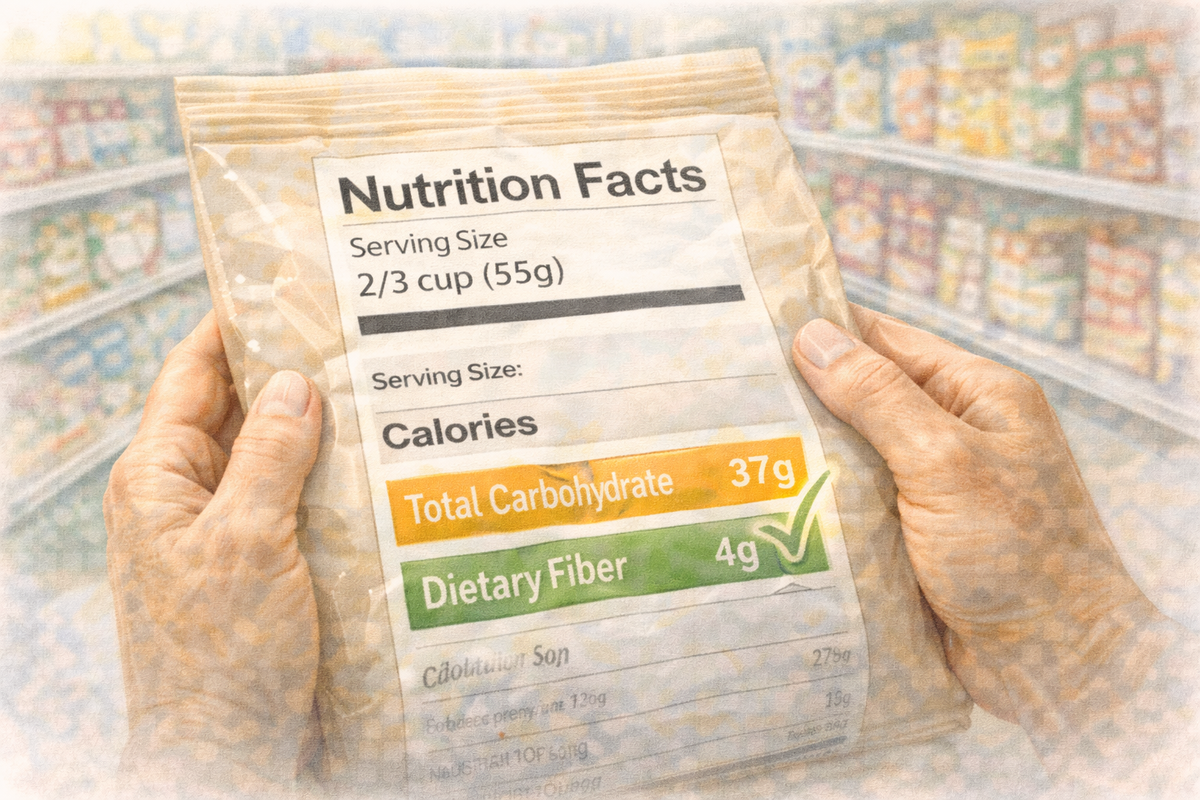
Learn to read nutrition labels with confidence when managing prediabetes. This guide covers serving sizes, carbohydrates, added sugars and fiber - giving you the tools to make smart choices for stable blood sugar.
Reading Nutrition Labels for Prediabetes: Your Guide to Better Blood Sugar Control
Navigating the grocery store aisles can feel overwhelming when you're managing prediabetes. You pick up a product that looks healthy, but the nutrition label might as well be written in another language. With over 96 million American adults living with prediabetes, you're far from alone in this challenge.
Understanding what's really in your food is one of the most powerful tools you have. The American Diabetes Association reports that making informed food choices can help prevent or delay type 2 diabetes. This guide will walk you through reading nutrition labels step by step, giving you confidence at the grocery store.
Why Nutrition Labels Matter for Prediabetes
When you have prediabetes, your blood sugar levels are higher than normal but not yet high enough to be diagnosed as type 2 diabetes. The CDC states that without lifestyle changes, 15-30% of people with prediabetes will develop type 2 diabetes within five years.
The foods you eat directly impact your blood sugar. Nutrition labels provide essential information about carbohydrates, added sugars, and fiber. These details help you make choices that keep your blood sugar stable.
Tools like Sweet Not Sugar can help you track your food choices and understand how different foods affect your blood sugar. Many people find this extra support makes the learning process easier.
Start with the Serving Size
The serving size is listed at the top of every nutrition label, and it's the most important place to start. All the numbers below it apply to this specific amount of food.
Here's what you need to know:
- The serving size is not necessarily the amount you should eat
- Packages often contain multiple servings
- If you eat more than one serving, you need to multiply all the numbers
Common mistakes to avoid:
- Eating directly from the package (you'll likely eat more than one serving)
- Assuming the entire container is one serving
- Not checking if your portion matches the serving size
Try this today: Take a food from your pantry and measure out the exact serving size listed on the label. You might be surprised at how much smaller (or larger) it is than what you normally eat.
Understanding Total Carbohydrates
Carbohydrates have the biggest impact on your blood sugar. The total carbohydrate number includes several types:
- Sugars (both natural and added)
- Fiber
- Sometimes sugar alcohols
Key points about carbohydrates:
- Aim for 45-60 grams of carbohydrates per meal, as recommended by the ADA
- The total carbohydrate count matters more than just the sugar content
- Fiber is important because it slows down how quickly sugar enters your bloodstream
What to look for:
- Choose foods with at least 3-5 grams of fiber per serving
- Compare total carbohydrates between similar products
- Remember that "net carbs" (total carbs minus fiber) isn't always the best measure
The Truth About Sugars
The sugars section can be confusing because it includes both natural and added sugars. Newer labels now separate these two types, making it easier to make informed choices.
Natural sugars occur naturally in foods like:
- Fruit (fructose)
- Milk (lactose)
- Vegetables
Added sugars are put in during processing and include:
- Table sugar (sucrose)
- High-fructose corn syrup
- Honey
- Maple syrup
- Any ingredient ending in "-ose"
The American Heart Association recommends limiting added sugars to:
- Men: No more than 36 grams (9 teaspoons) per day
- Women: No more than 25 grams (6 teaspoons) per day
Try this today: Check the added sugar content on three similar products (like bread, cereal, or pasta sauce). Choose the one with the least added sugar.
Fiber: Your Blood Sugar Friend
Fiber is a type of carbohydrate that your body cannot digest. It's extremely important for blood sugar control because it:
- Slows down the absorption of sugar
- Helps you feel full longer
- Supports digestive health
- May improve cholesterol levels
The National Institute of Diabetes and Digestive and Kidney Diseases recommends adults aim for 25-30 grams of fiber per day.
How to spot high-fiber foods:
- Look for "whole grain" as the first ingredient
- Choose foods with at least 3 grams of fiber per serving
- Include plenty of vegetables, fruits, beans, and whole grains
Decoding the Ingredients List
The ingredients list tells you exactly what's in your food, listed in order of weight from most to least. This is where you'll find hidden sugars and unhealthy fats.
Red flags to watch for:
- Sugar in the first three ingredients
- Multiple types of sugar (they may be listed separately to appear lower on the list)
- Artificial sweeteners if they bother your stomach
- Hydrogenated oils (trans fats)
Sugar by any other name:
- High-fructose corn syrup
- Dextrose
- Sucrose
- Maltose
- Cane juice
- Fruit juice concentrate
- Agave nectar
- Brown rice syrup
Common Prediabetes Label Myths
Let's clear up some confusion about nutrition labels and blood sugar.
Myth #1: "Sugar-free" means it won't raise my blood sugar
Truth: Sugar-free products may still contain carbohydrates that affect blood sugar. Always check the total carbohydrate count, not just the sugar content.
Myth #2: "Natural" or "organic" automatically means healthier
Truth: Natural sugars (like honey or maple syrup) still count as added sugar and affect blood sugar similarly to regular sugar. Organic products can still be high in sugar and carbs.
Myth #3: I should avoid all carbohydrates
Truth: Your body needs carbohydrates for energy. The key is choosing the right types (high-fiber, whole grains) and watching portion sizes.
Putting It All Together: A Simple System
Reading nutrition labels doesn't have to be complicated. Here's a simple system you can use every time you shop:
Step 1: Check the serving size
- Is this realistic for what you'll actually eat?
- Remember to multiply if you eat more
Step 2: Look at total carbohydrates
- Aim for 15-30 grams per serving for snacks
- Keep meals around 45-60 grams total
Step 3: Check added sugars
- Look for less than 5 grams per serving
- The lower, the better
Step 4: Look at fiber
- Choose foods with at least 3 grams per serving
- Higher fiber helps control blood sugar spikes
Step 5: Scan the ingredients
- Make sure sugar isn't in the first three ingredients
- Look for whole grains as the first ingredient
Try this today: Create a "label reading kit" for your next shopping trip. Include a small calculator, a notepad, and this guide. Take your time in the store until you get comfortable with the process.
Real-Life Examples
Understanding labels becomes easier with practice. Let's look at some common grocery items:
Example 1: Breakfast Cereal
- Good choice: Old-fashioned oatmeal (½ cup dry)
- Serving size: ½ cup (40g)
- Total carbs: 27g
- Fiber: 4g
- Added sugars: 0g
- Better than: Sweetened cereal
- Often has 15-20g added sugar per serving
Example 2: Bread
- Good choice: 100% whole wheat bread
- First ingredient: whole wheat flour
- Look for 3-5g fiber per slice
- Less than 3g sugar per slice
- Compare to: White bread
- First ingredient: enriched wheat flour
- Only 1g fiber per slice
Example 3: Yogurt
- Good choice: Plain Greek yogurt
- Serving size: ¾ cup
- Total carbs: 9g
- Added sugars: 0g
- You can add your own fruit
- Compare to: Flavored yogurt
- Often has 15-25g added sugar
When Shopping Gets Overwhelming
Grocery shopping can feel like a minefield when you're first learning about nutrition labels. Here are some strategies that help:
Plan ahead:
- Make a list based on meals you've planned
- Stick to the perimeter of the store (where fresh foods are)
- Shop when you're not hungry
Start slow:
- Focus on one food category per shopping trip
- Start with breakfast foods, then move to snacks
- Build confidence gradually
Use technology:
- Take photos of nutrition labels to review later
- Many people find apps like Sweet Not Sugar helpful for comparing options
- Some apps can scan barcodes for instant information
Making Label Reading a Habit
Like any new skill, reading nutrition labels gets easier with practice. Here's how to make it stick:
Week 1-2:
- Focus on just one or two items per shopping trip
- Compare similar products side by side
- Take photos of labels you're unsure about
Week 3-4:
- Expand to more food categories
- Start noticing patterns (which brands usually work well)
- Keep a small notebook of "go-to" products
Month 2 and beyond:
- Reading labels becomes automatic
- You'll recognize good choices quickly
- You'll discover which products work best for your blood sugar
Frequently Asked Questions
Q: Should I avoid all foods with sugar on the label?
A: Not necessarily. Many healthy foods like milk, yogurt, and fruit contain natural sugars. The key is watching for added sugars and keeping portions reasonable. A small amount of naturally occurring sugar in an otherwise healthy food is usually fine.
Q: What's the difference between "reduced sugar" and "no added sugar"?
A: "Reduced sugar" means the product has at least 25% less sugar than the original version, but it may still have added sugars. "No added sugar" means no sugars were added during processing, but the food may still contain natural sugars. Read the label carefully.
Q: Are sugar alcohols okay for prediabetes?
A: Sugar alcohols (like xylitol, erythritol) affect blood sugar less than regular sugar. However, they can cause digestive upset in some people, especially when eaten in large amounts. Start with small portions to see how your body reacts.
Q: How do I know if I'm reading labels correctly?
A: Consider working with a registered dietitian initially. They can review your food choices and help you understand labels better. If you'd like extra support, Sweet Not Sugar makes it easy to track your meals and see how different foods affect your blood sugar.
Key Takeaways
- Start with the serving size - it's the foundation for understanding everything else on the label
- Total carbohydrates matter most - but don't forget to check fiber and added sugars
- Added sugars should be limited - aim for less than 5 grams per serving
- Fiber is your friend - look for at least 3 grams per serving
- Ingredients lists reveal hidden sugars - check for sugar in the first three ingredients
- Practice makes progress - reading labels gets easier over time
When to Talk to Your Doctor
Always talk to your doctor or a registered dietitian before making major changes to your diet. They can provide personalized advice based on:
- Your specific blood sugar levels
- Other health conditions
- Medications you're taking
- Your individual nutritional needs
If you're struggling to understand nutrition labels, ask your doctor for a referral to a dietitian who specializes in diabetes care. Many people find this one-on-one guidance extremely helpful.
Final Thoughts
Learning to read nutrition labels is an investment in your health. While it might feel overwhelming at first, remember that small changes add up over time. Every informed choice you make at the grocery store is a step toward better blood sugar control and a healthier future.
You don't have to be perfect - progress, not perfection, is what matters. Start with one food category, practice consistently, and be patient with yourself as you learn this new skill. Your health is worth the effort.
Medical Disclaimer
This article is for educational purposes only and is not intended to replace medical advice from your healthcare provider. Always talk to your doctor or a qualified healthcare professional about your specific health needs, especially when managing prediabetes or diabetes. Individual nutritional needs vary, and what works for one person may not work for another.