How to Understand Added Sugar vs Natural Sugar

Learn to manage your blood sugar levels by understanding the difference between added and natural sugars, with expert tips and advice for adults.
Introduction to Understanding Added Sugar vs Natural Sugar
Many adults struggle to manage their blood sugar levels, and one of the main reasons is the confusion between added and natural sugars. Added sugars are those that are added to foods during processing, while natural sugars are found naturally in foods like fruits and vegetables. In this article, we will explore the difference between added and natural sugars, and provide tips on how to manage your blood sugar levels.
Imagine you're at a restaurant, and you order a salad with grilled chicken. You think you're making a healthy choice, but the salad dressing contains added sugars. This is just one example of how added sugars can sneak into our diets. According to the CDC, more than 80% of adults in the US consume too much added sugar.
In this article, you'll learn how to identify added and natural sugars, and how to make informed choices to manage your blood sugar levels. You'll also learn about tools like Sweet Not Sugar that can help you track your sugar intake and make healthier choices.
What are Added Sugars?
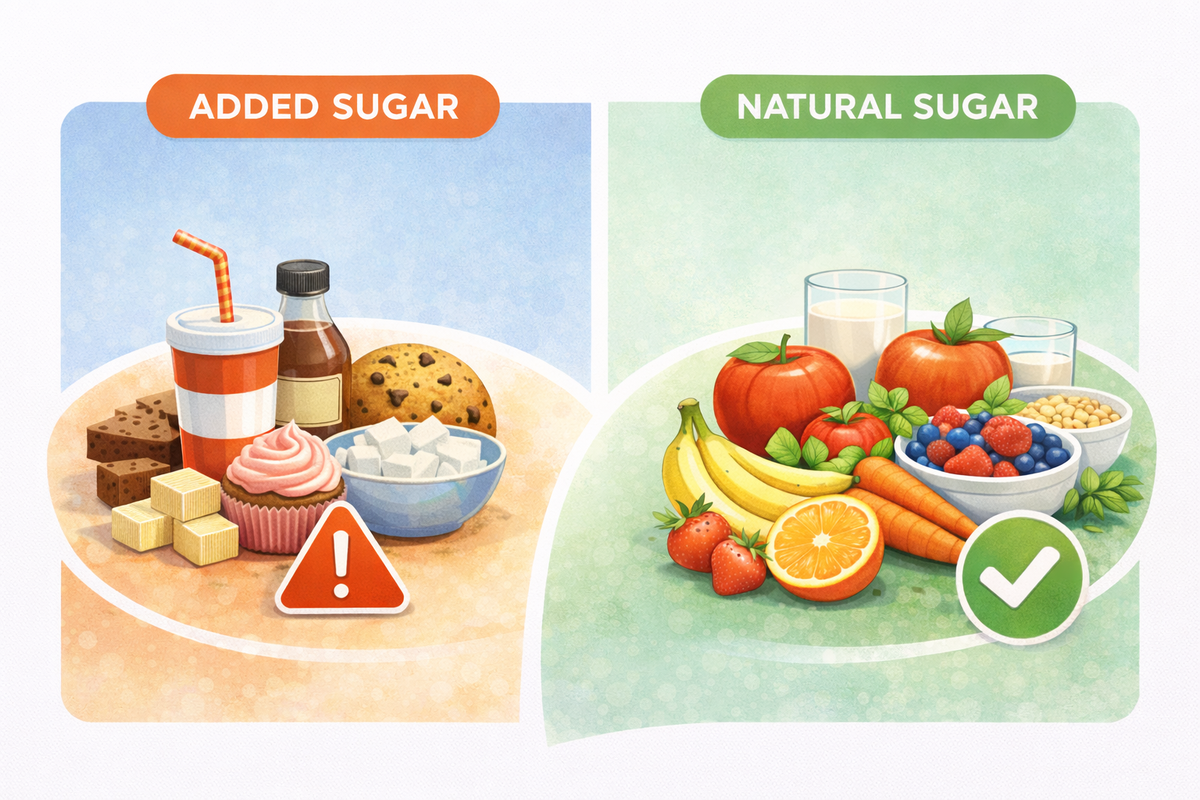
Added sugars are those that are added to foods during processing. They can be found in a variety of foods, including baked goods, candy, and sweetened beverages. The American Heart Association recommends that women consume no more than 25 grams (6 teaspoons) of added sugar per day, and men consume no more than 36 grams (9 teaspoons) per day.
Here are some common sources of added sugars:
- Sugary drinks like soda and sports drinks
- Refined grains like white bread and sugary cereals
- Processed meats like bacon and sausage
- Baked goods like cakes and cookies
Try This Today:
- Check the ingredient list on your favorite foods to see if they contain added sugars.
- Choose unsweetened beverages like water or seltzer instead of sugary drinks.
What are Natural Sugars?
Natural sugars are found naturally in foods like fruits and vegetables. They are an important source of energy and can be part of a healthy diet. The NIH recommends that adults consume at least 1.5 cups of fruit per day.
Here are some common sources of natural sugars:
- Fruits like apples and bananas
- Vegetables like carrots and sweet potatoes
- Dairy products like milk and yogurt
- Whole grains like brown rice and quinoa
How to Identify Added and Natural Sugars
Identifying added and natural sugars can be challenging, but there are some tips that can help. Always read the ingredient list and look for words like "sugar," "high fructose corn syrup," and "honey." You can also check the nutrition label to see if the food contains added sugars.
Here are some common myths about added and natural sugars:
- Myth: All sugar is bad for you.
- Reality: Natural sugars can be part of a healthy diet, while added sugars should be limited.
- Myth: You can't get too much sugar from fruit.
- Reality: While fruit is a healthy source of natural sugars, it's still possible to consume too much sugar if you eat too much fruit.
Want this made simple?
Added sugar can hide in foods that look “healthy.”
Sweet Not Sugar helps you take a quick photo of what you’re eating and see added vs natural sugar, plus a few easy swap ideas - without obsessing over labels.
Next step: Join the Waitlist
Frequently Asked Questions
Q: What is the difference between added and natural sugars?
A: Added sugars are those that are added to foods during processing, while natural sugars are found naturally in foods like fruits and vegetables.
Q: How much added sugar should I consume per day?
A: The American Heart Association recommends that women consume no more than 25 grams (6 teaspoons) of added sugar per day, and men consume no more than 36 grams (9 teaspoons) per day.
Q: Can I get too much sugar from fruit?
A: While fruit is a healthy source of natural sugars, it's still possible to consume too much sugar if you eat too much fruit.
Q: How can I track my sugar intake?
A: Tools like Sweet Not Sugar can help you track your sugar intake and make healthier choices.
Key Takeaways
- Added sugars are those that are added to foods during processing.
- Natural sugars are found naturally in foods like fruits and vegetables.
- Always read the ingredient list and check the nutrition label to identify added and natural sugars.
- Choose unsweetened beverages and limit your intake of added sugars.
- Tools like Sweet Not Sugar can help you track your sugar intake and make healthier choices.
When to Talk to Your Doctor
If you have concerns about your blood sugar levels or sugar intake, talk to your doctor. They can provide personalized advice and help you develop a plan to manage your blood sugar levels.
Conclusion
Managing your blood sugar levels can be challenging, but understanding the difference between added and natural sugars is an important step. By following the tips in this article and using tools like Sweet Not Sugar, you can make informed choices and take control of your health. Remember to always read the ingredient list, choose unsweetened beverages, and limit your intake of added sugars.
Celebrate your small wins and don't be too hard on yourself if you slip up - every healthy choice you make is a step in the right direction.
Next step
If you’d like extra support day-to-day, Sweet Not Sugar can help you spot hidden added sugar faster and choose a better option with less guesswork.
Optional help: Join the Waitlist
Disclaimer: This article is for informational purposes only and is not intended to provide medical advice. Always talk to your doctor before making any changes to your diet or exercise routine.