7 Smart Travel Snacks for Steady Blood Sugar on the Go

Traveling with type 2 diabetes or prediabetes can be tricky. Discover smart, delicious travel snacks to keep your blood sugar stable and enjoy your trip worry-free.
7 Smart Travel Snacks for Steady Blood Sugar on the Go
Traveling is one of life's great pleasures. But if you're managing type 2 diabetes or prediabetes, hitting the road can bring unique challenges. You might worry about finding healthy food or keeping your blood sugar steady far from your usual routine.
It's completely normal to feel this way. Many adults find that travel disrupts their eating habits. But with a little planning, you can enjoy your adventures without sacrificing your health. This guide will show you how to pack smart, blood-sugar-friendly snacks for your next trip, whether it's a road trip, flight, or day out.
Why Smart Snacking Matters When You Travel
When you're on the go, meal times can be unpredictable. Airport delays, long drives, or tours can make regular meals difficult. This is where smart snacks become your best friend. They prevent dips in blood sugar and help you avoid grabbing less healthy, sugary options when hunger strikes.
Did you know that more than 38 million Americans have diabetes? (CDC, 2024). For many, managing blood sugar away from home can feel like an uphill battle. But packing your own snacks puts you in control. It helps you stick to your goals, even when facing new environments.
Understanding Your Blood Sugar Needs
Before you pack, think about what makes a snack "blood sugar friendly." Aim for snacks that combine protein, fiber, and healthy fats. These nutrients slow down sugar absorption and help you feel full longer. This can prevent sharp rises and falls in blood sugar.
Fiber is especially important. Most American adults, especially those over 50, don't get enough fiber (NIH, 2023). Fiber-rich foods include vegetables, fruits, whole grains, nuts, and seeds. They are digested slowly, which helps keep blood sugar levels more stable.
Try This Today:
Before your next trip, make a short list of 3 high-protein, high-fiber snacks you enjoy. This helps you start thinking concretely about your options.
Common Travel Traps for Blood Sugar
When traveling, it's easy to fall into habits that can impact blood sugar. Understanding these traps helps you avoid them:
- Relying on Convenience Store Snacks: Often high in added sugar, unhealthy fats, and refined carbs.
- Skipping Meals: This can lead to overeating later or blood sugar lows.
- Underestimating Sugar in Drinks: Sweetened teas, sodas, and even some fruit juices are packed with sugar.
- Portion Distortion: Large restaurant portions or buffet-style eating can make it hard to manage intake.
Top 7 Smart Travel Snacks for Type 2 Diabetes
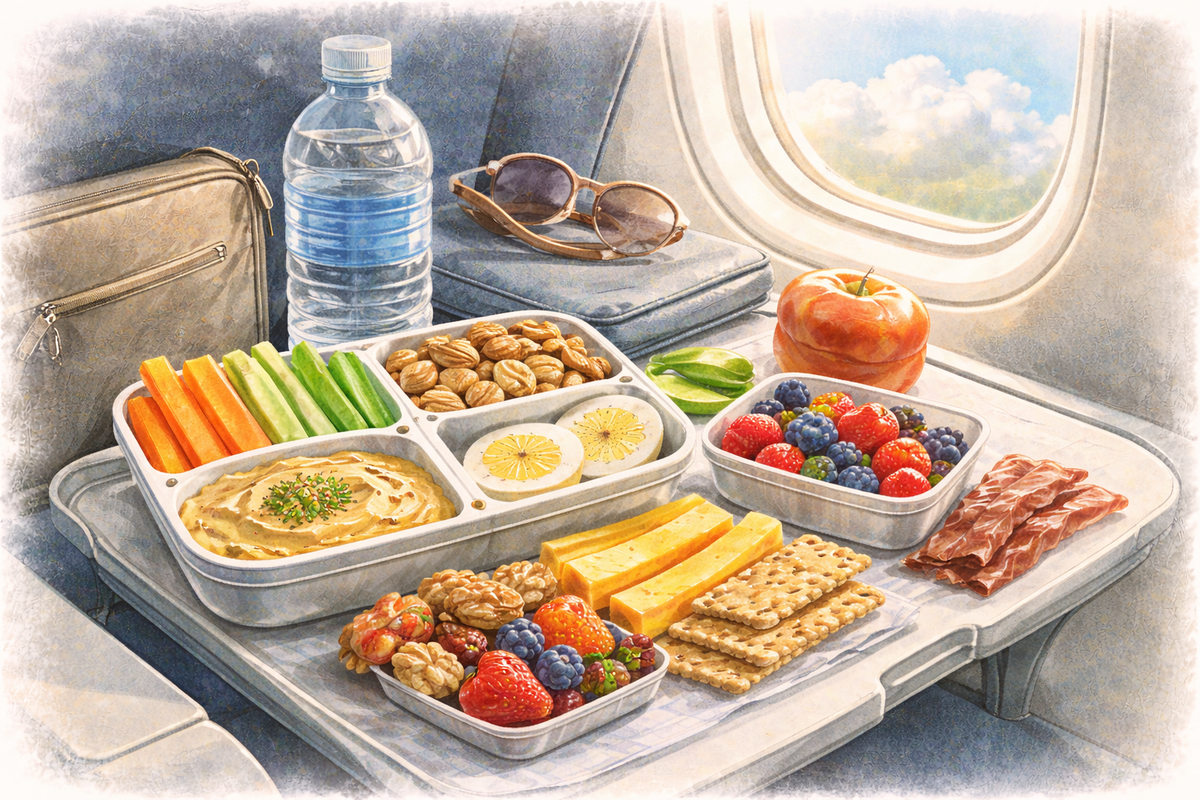
Here are some excellent choices that are easy to pack, travel well, and support steady blood sugar:
- Nuts and Seeds (Unsalted)
- Why they're great: Packed with healthy fats, protein, and fiber. Almonds, walnuts, pistachios, and pumpkin seeds are fantastic.
- Travel Tip: Portion them into small, resealable bags to avoid overeating. A handful is usually enough.
- Example: A small bag of almonds and a few walnuts can be very satisfying.
- Hard-Boiled Eggs
- Why they're great: An excellent source of protein. They help you feel full and keep blood sugar steady.
- Travel Tip: Cook them at home, peel them, and store them in a small container in a cooler bag. They usually last a few days.
- Example: Two hard-boiled eggs for a quick protein boost on a long drive.
- Cheese Sticks or Cubes
- Why they're great: Provide protein and fat without many carbs. Easy to find in most grocery stores.
- Travel Tip: Keep them chilled in a small cooler bag. They make a great pairing with a few whole-grain crackers (check sugar content!).
- Example: Two string cheese sticks with a small apple for a balanced snack.
- Whole Fruit (Apples, Pears, Oranges)
- Why they're great: Offers natural sweetness, fiber, and vitamins. Whole fruit is better than juice.
- Travel Tip: Choose fruits that are less likely to bruise. Wash them before you go. Remember to pair fruit with protein or healthy fat to slow sugar absorption.
- Example: A medium apple with a small handful of cashews.
- Vegetable Sticks (Carrots, Celery, Bell Peppers)
- Why they're great: Very low in calories, high in fiber, and satisfyingly crunchy.
- Travel Tip: Pack them in a container. Consider a small separate container of hummus or nut butter for dipping (watch portion sizes for dips).
- Example: Carrot and celery sticks with two tablespoons of hummus.
- Plain Greek Yogurt (Individual Cups)
- Why they're great: High in protein, which helps with satiety and blood sugar control. Plain yogurt has no added sugar.
- Travel Tip: Needs to stay chilled. Great for car trips with a small cooler. Avoid flavored varieties, which often have lots of added sugar.
- Example: An individual cup of plain Greek yogurt with a few berries sprinkled on top.
- Sugar-Free Jerky or Meat Sticks
- Why they're great: Excellent source of lean protein. Good for satisfying savory cravings without a carb load.
- Travel Tip: Check labels carefully for "sugar-free" or "low sugar." Many brands add sugar or syrups. Look for natural ingredients.
- Example: A small portion of turkey jerky when you need something quick and easy.
Try This Today:
Before your next outing, pick one snack from this list you haven't tried before. See how it fits into your day and how it makes you feel.
Smart Hydration for Travel
Don't forget about drinks! Staying hydrated is crucial for overall health, including blood sugar management. Dehydration can sometimes make blood sugar levels appear higher.
- Water is best: Carry a reusable water bottle and refill it often.
- Unsweetened coffee or tea: If you enjoy these, skip the sugar and creamy additions.
- Avoid sugary drinks: Sodas, sweetened juices, and energy drinks can cause rapid blood sugar spikes.
Making Smart Choices When You Can't Pack
Sometimes, packing isn't possible, or you run out of your own snacks. Here are tips for making good choices on the fly:
- Look for grocery stores: Even small towns usually have a market where you can grab fruit, nuts, or cheese.
- Choose wisely at rest stops: Look for options like roasted nuts, hard-boiled eggs, small bags of carrots, or single-serving plain yogurt.
- Be aware of "healthy" traps: Granola bars, smoothies, and fruit juices can sometimes contain as much sugar as a soda. Always read labels. Tools like Sweet Not Sugar can help you quickly understand added sugar vs. natural sugar in foods.
Myth Buster: "Diet" or "Sugar-Free" Means Healthy
Myth: All diet or sugar-free foods are good for blood sugar control.
Fact: While some sugar-free options are helpful, many "diet" foods still contain refined carbohydrates or artificial sweeteners that might affect some people differently or encourage cravings. It's always best to focus on whole, unprocessed foods. Always check the nutrition label. The American Diabetes Association recommends focusing on whole foods over highly processed "diet" foods (ADA, 2023).
Monitoring Your Blood Sugar On the Go
Even with careful planning, travel can affect your blood sugar. Changes in activity levels, time zones, and even stress can play a role. The CDC reports that about 1 in 3 adults has prediabetes (CDC, 2024), and many don't even know it. If you're managing prediabetes or diabetes, regular blood sugar monitoring is key.
- Pack your meter and supplies: Don't forget extra strips, lancets, and batteries.
- Test more frequently: Consider checking your blood sugar more often than usual, especially when trying new foods or if your routine is very different.
- Keep a small log: Jot down numbers, what you ate, and how you felt. This helps you learn what works best for your body.
Many people find apps like Sweet Not Sugar helpful for tracking what they eat and understanding how different foods impact their blood sugar. The visual analysis of added sugar can be a game-changer when you're trying new things.
Managing Medications While Traveling
If you take medications for diabetes, remember to pack them carefully:
- Carry-on is best: Keep all medications, including insulin, in your carry-on bag. Temperatures in checked luggage can be extreme.
- Original containers: Keep medications in their original prescription bottles with labels.
- Doctor's note: If you have medications that require needles (like insulin), carry a doctor's note explaining your need for these supplies.
- Time zone changes: Talk to your doctor or pharmacist about adjusting medication times if you're crossing several time zones.
Try This Today:
Before your next trip, gather all your medications and make sure you have enough for your entire journey, plus a few extra days.
Planning Ahead for Success
Successful blood sugar management while traveling comes down to preparation. Think about your entire trip, from departure to arrival. Doing a little homework beforehand can save a lot of stress (and blood sugar spikes!).
- Research meal options: If you know where you'll be eating, look up menus online in advance. Most restaurants now publish their nutrition information.
- Pack a small cooler: A small, insulated bag with an ice pack is invaluable for keeping perishable snacks safe.
- Hydrate well: Especially on flights, where the air can be very dry.
Key Takeaways
- Plan ahead: Pack blood-sugar-friendly snacks combining protein, fiber, and healthy fats.
- Prioritize water: Stay hydrated by drinking plenty of water.
- Read labels: Be wary of hidden sugars in "diet" or "healthy" sounding foods.
- Monitor regularly: Test your blood sugar more often when traveling to see how different routines impact you.
- Consult your doctor: Always talk to your doctor about medication adjustments or specific travel concerns.
When to Talk to Your Doctor
Always talk to your doctor or a registered dietitian before making big changes to your diet or if you have concerns about managing your diabetes while traveling. They can provide personalized advice based on your health needs and medication regimen. This is especially important if you are crossing multiple time zones or changing your activity level significantly.
Traveling with diabetes or prediabetes doesn't have to be overwhelming. With thoughtful planning and smart snack choices, you can explore the world with confidence and keep your blood sugar in check. Remember, every small step you take to manage your health is a victory.
If you'd like extra support in making smarter food choices and understanding your sugar intake, Sweet Not Sugar makes it easy to analyze your meals and build sustainable habits over time.
Medical Disclaimer: This article provides general information and is not a substitute for professional medical advice, diagnosis, or treatment. Always seek the advice of your physician or other qualified health provider with any questions you may have regarding a medical condition.
Sources:
- Centers for Disease Control and Prevention (CDC). "National Diabetes Statistics Report." https://www.cdc.gov/diabetes/data/statistics/statistics-report.html
- American Diabetes Association (ADA). "Standards of Medical Care in Diabetes." https://diabetesjournals.org/care/issue/current
- National Institutes of Health (NIH). "Dietary Fiber: MedlinePlus Medical Encyclopedia." https://medlineplus.gov/dietaryfiber.html