7 Diabetes-Friendly Ways to Master Portion Control
Learn how to control your portions with common winter comfort foods without feeling deprived, and manage your diabetes effectively.
Managing diabetes can be challenging, especially during the winter months when comfort foods are plentiful. As someone with diabetes, it's essential to master portion control to keep your blood sugar levels in check. In this article, we'll explore 7 diabetes-friendly ways to control your portions with common winter comfort foods without feeling deprived.
Simple Strategies
Imagine being able to enjoy your favorite winter comfort foods without worrying about spiking your blood sugar levels. With a few simple strategies, you can master portion control and manage your diabetes effectively. In this article, we'll show you how to do just that.
Quick Answer
Eat smaller, more frequent meals to control hunger and portion sizes
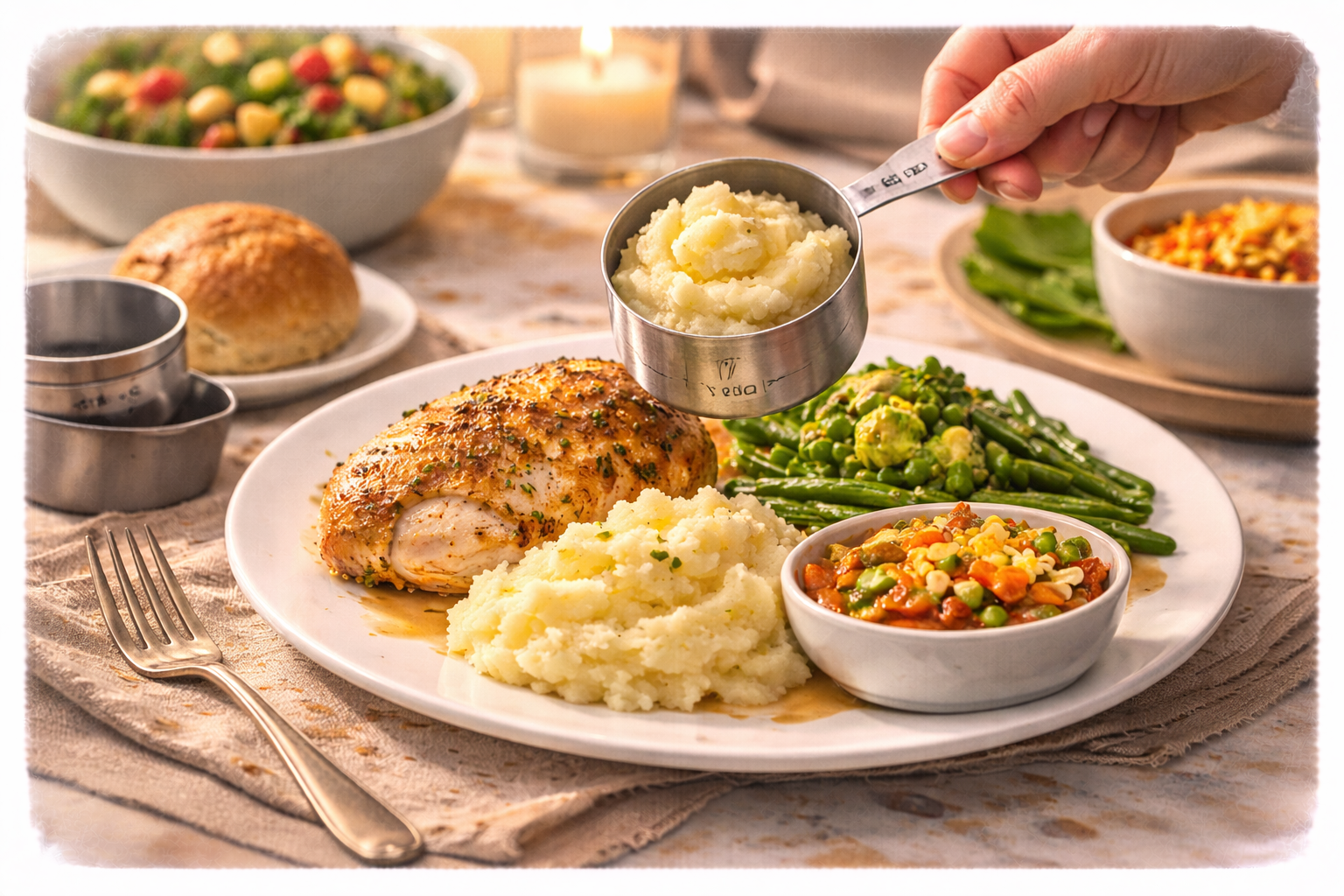
Use a food scale or measuring cups to measure your food portions
Choose nutrient-dense foods like vegetables, whole grains, and lean proteins
Why This Matters
Portion control is crucial for managing diabetes, as it helps regulate blood sugar levels and prevent complications like heart disease and kidney damage. By mastering portion control, you can reduce your risk of these complications and improve your overall health.
Understanding Portion Sizes
To master portion control, it's essential to understand what a standard portion size looks like. A standard portion size is the amount of food that provides a specific amount of calories, carbohydrates, and other nutrients. For example, a standard portion size of cooked pasta is 1/2 cup, while a standard portion size of cooked chicken is 3 ounces.
Measuring Food Portions
Measuring your food portions is crucial to mastering portion control. You can use a food scale or measuring cups to measure your food portions. For example, a serving size of oatmeal is 1/2 cup cooked, while a serving size of almonds is 1 ounce or 23 nuts.
Choosing Nutrient-Dense Foods
Choosing nutrient-dense foods like vegetables, whole grains, and lean proteins can help you master portion control. These foods are rich in fiber, vitamins, and minerals, and can help you feel full and satisfied. For example, a serving size of broccoli is 1 cup cooked, while a serving size of quinoa is 1/2 cup cooked.
Common Mistakes
Eating too much at one time
Not measuring food portions
Choosing high-calorie, high-carbohydrate foods
Not drinking enough water
Not getting enough physical activity
Try This Today
Try measuring your food portions using a food scale or measuring cups. Start with one meal or snack per day and gradually increase to all meals and snacks.
Differentiation
To master portion control, it's essential to differentiate between different types of foods. For example, a serving size of fruit is 1 medium fruit, while a serving size of cheese is 1 ounce or 28 grams. By understanding the different serving sizes of various foods, you can make informed choices and master portion control.
7-Day Mini Plan
Here is a 7-day mini plan to help you master portion control:
- Day 1: Measure your food portions using a food scale or measuring cups
- Day 2: Choose nutrient-dense foods like vegetables, whole grains, and lean proteins
- Day 3: Eat smaller, more frequent meals to control hunger and portion sizes
- Day 4: Drink plenty of water to help control hunger and portion sizes
- Day 5: Get enough physical activity to help regulate blood sugar levels
- Day 6: Choose low-calorie, low-carbohydrate foods like vegetables and lean proteins
- Day 7: Review your progress and make adjustments as needed
Grocery List
Here is a list of 10 specific grocery items to help you master portion control:
- Fresh vegetables like broccoli, carrots, and bell peppers
- Whole grains like brown rice, quinoa, and whole wheat bread
- Lean proteins like chicken, turkey, and fish
- Low-calorie, low-carbohydrate foods like vegetables and lean proteins
- Healthy fats like nuts, seeds, and avocados
- Low-fat dairy products like milk, yogurt, and cheese
- Fresh fruit like apples, bananas, and berries
- Whole grain pasta and rice
- Canned beans and vegetables
- Herbs and spices like basil, oregano, and cumin
What to Order
When eating out, it's essential to choose foods that are low in calories, carbohydrates, and fat. Here are some tips for what to order:
- Choose grilled or baked foods instead of fried foods
- Select vegetables and lean proteins as side dishes
- Opt for whole grains like brown rice and whole wheat bread
- Limit your intake of high-calorie, high-carbohydrate foods like pasta and pizza
- Drink plenty of water to help control hunger and portion sizes
Want This Made Simple?
Try taking a photo of your meals and snacks and getting added vs natural sugar and glycemic insight. This can help you master portion control and manage your diabetes effectively. Join the Waitlist
Try This Today
Try choosing nutrient-dense foods like vegetables, whole grains, and lean proteins. Start with one meal or snack per day and gradually increase to all meals and snacks.
Common Mistakes
As mentioned earlier, common mistakes that people with diabetes make when trying to master portion control include eating too much at one time, not measuring food portions, choosing high-calorie, high-carbohydrate foods, not drinking enough water, and not getting enough physical activity.
Definitions Section
Here are some key definitions to help you understand the concepts in this article:
- Portion control: The practice of eating a specific amount of food at one time to regulate blood sugar levels and prevent complications like heart disease and kidney damage.
- Nutrient-dense foods: Foods that are rich in fiber, vitamins, and minerals, and can help you feel full and satisfied.
- Serving size: The amount of food that provides a specific amount of calories, carbohydrates, and other nutrients.
- Food scale: A device used to measure the weight of food portions.
- Measuring cups: A device used to measure the volume of food portions.
Next Step
If you're looking for extra support to master portion control and manage your diabetes, consider trying a diabetes management app like Sweet Not Sugar. This app can help you track your food portions, monitor your blood sugar levels, and provide personalized recommendations for improving your diabetes management. Get the App
FAQ's
What is portion control?
Portion control is the practice of eating a specific amount of food at one time to regulate blood sugar levels and prevent complications like heart disease and kidney damage.
Why is portion control important for diabetes management?
Portion control is important for diabetes management because it helps regulate blood sugar levels and prevent complications like heart disease and kidney damage.
How can I measure my food portions?
You can measure your food portions using a food scale or measuring cups.
What are some examples of nutrient-dense foods?
Examples of nutrient-dense foods include vegetables, whole grains, and lean proteins.
How can I get extra support to master portion control and manage my diabetes?
You can get extra support to master portion control and manage your diabetes by trying a diabetes management app like Sweet Not Sugar.
Key Takeaways
- Mastering portion control is crucial for managing diabetes
- Measuring food portions is essential for mastering portion control
- Choosing nutrient-dense foods can help you feel full and satisfied
- Drinking plenty of water can help control hunger and portion sizes
- Getting enough physical activity can help regulate blood sugar levels
Try This Today
Try drinking plenty of water to help control hunger and portion sizes. Aim for at least 8 cups of water per day.
Safety Notes
Safety Notes
If you use insulin or a sulfonylurea, watch for low blood sugar. Check with your clinician before making major changes to your diet or exercise routine.
When to Talk to Your Doctor
If you experience any symptoms like dizziness, confusion, or blurred vision, talk to your doctor immediately.
Sources
This article is supported by the following sources:
- Centers for Disease Control and Prevention (CDC)
- American Diabetes Association (ADA)
- National Institutes of Health (NIH)
- Mayo Clinic
- Peer-reviewed journals like the Journal of the American Medical Association (JAMA) and the New England Journal of Medicine (NEJM)
Related Articles
Here are some related article titles for topical clustering:
- Added Sugar vs Natural Sugar
- Glycemic Index vs Glycemic Load Explained
- Best Snacks for Steady Blood Sugar
- Reading Nutrition Labels
Disclaimer
This article is for informational purposes only and is not intended to provide medical advice. Consult with your healthcare provider before making any changes to your diet or exercise routine.